RimbaScape Guide
Subsoil in Landscaping: Why It Matters for Healthy Plants
Subsoil is the hidden layer beneath the topsoil. It affects drainage, root growth, soil strength and long-term landscape health.
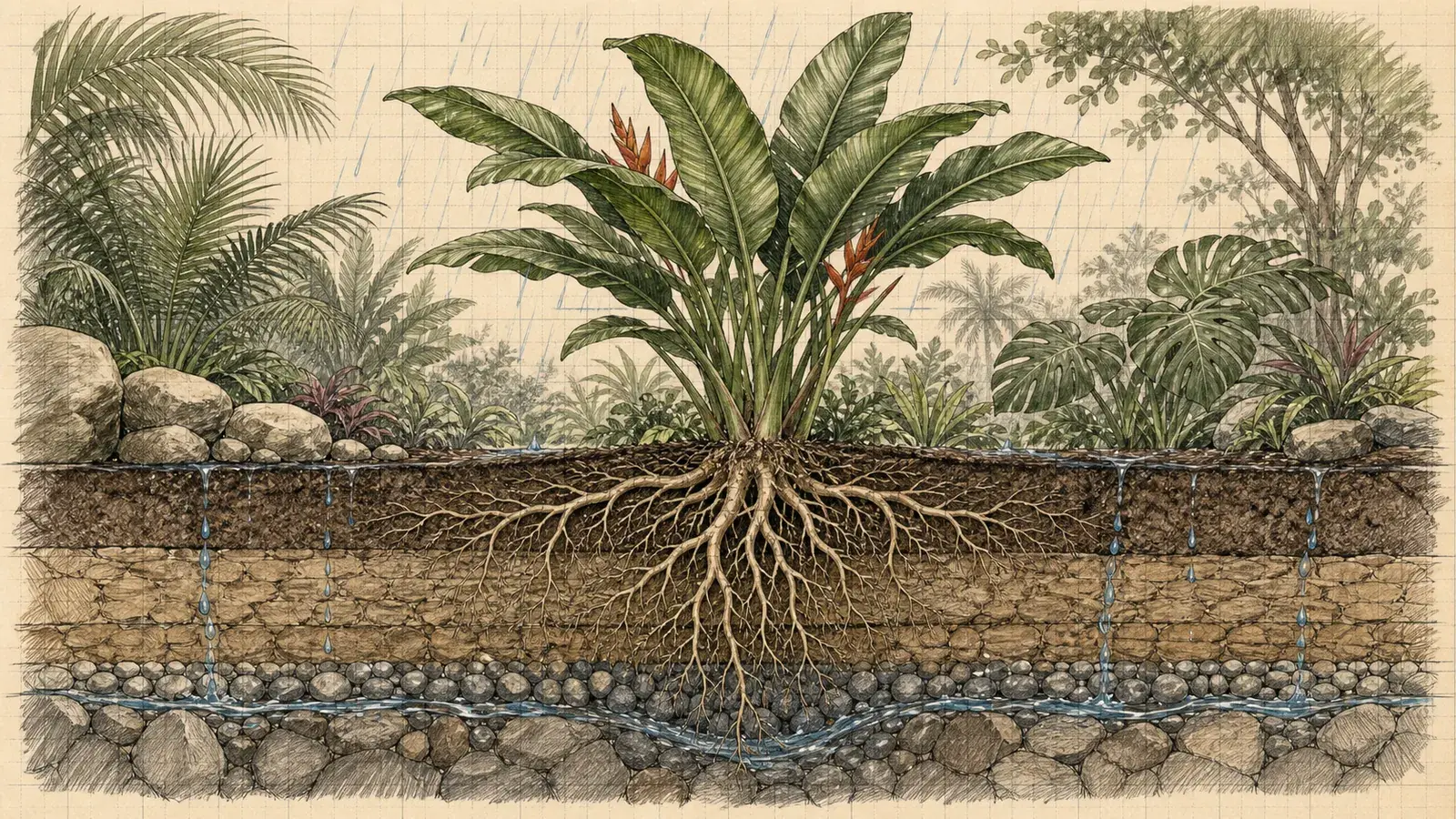
A beautiful landscape does not only depend on plants, grass, fertiliser and watering. One of the most important parts of any garden is the soil underneath the surface.
Many people focus only on topsoil, but the layer below it, called subsoil, also plays a major role in plant health and landscape performance. If the subsoil is poor, compacted or badly drained, plants may struggle even when the surface looks clean and well-maintained.
For landscaping projects, especially in homes, offices, parks, hotels and commercial areas, understanding subsoil helps prevent long-term problems such as waterlogging, weak plant growth, root stress, soil sinking and repeated plant failure.
What is subsoil?
Subsoil is the layer of soil found below the topsoil.
Topsoil is usually darker, softer and richer in organic matter. This is where most nutrients, microorganisms and fine roots are found.
Subsoil is usually firmer, heavier and lighter in colour. It may contain more clay, sand, stones or compacted material. Although it has less organic matter than topsoil, it still affects how water, air and roots move through the ground.
In landscaping, subsoil acts like the foundation of the planting area. If the foundation is weak or poorly prepared, the landscape may fail over time.
Why subsoil is important in landscaping
- It controls how quickly water drains after rain
- It affects whether roots can grow deeper and stronger
- It supports soil stability for lawns, planting beds, pathways and edging
- It can explain repeated plant failure when watering and fertiliser are already correct
Subsoil controls drainage
- Heavy clay or compacted subsoil can trap water around roots
- Poor drainage can lead to yellow leaves, root rot, fungus problems and dying plants
- Wet soil areas can become muddy, smelly or attractive to mosquitoes
- In Malaysia's heavy rain, good subsoil drainage is especially important
A garden may look fine during dry weather but fail badly during rainy periods if the subsoil cannot release excess water.
Subsoil supports root growth
- Trees, palms, shrubs and larger landscape plants need space for deeper roots
- Hard subsoil can force roots to stay shallow
- Shallow roots make plants weaker during heat, drought or strong wind
- Good subsoil helps plants anchor strongly and access more moisture
A strong landscape begins below the surface.
Subsoil affects soil stability
- Poor subsoil can cause sinking, uneven surfaces or soft patches
- This matters for lawns, turf installation, planter boxes, pathways and garden edging
- If subsoil is not prepared properly, water may pool in low areas
- Good preparation reduces future repair cost and improves long-term landscape quality
Signs of poor subsoil
- Plants keep dying in the same area
- Leaves turn yellow even after fertilising
- Water stays on the surface after rain
- Soil becomes very hard when dry
- Roots grow sideways instead of downward
- Grass grows patchy
- Plant growth is slow or weak
Before replacing plants again and again, it is better to check the soil condition first.
Common subsoil problems in landscape sites
- Compacted subsoil from heavy machinery, vehicles or foot traffic
- Heavy clay subsoil that becomes sticky when wet and hard when dry
- Sandy subsoil that drains quickly but holds less moisture and nutrients
- Construction waste such as rubble, cement waste, bricks, stones or debris
- Poor soil layering, where good topsoil sits above a hard layer and creates a water trap
How to improve subsoil before landscaping
- Check the soil before planting by digging a small test hole
- Look at the colour, texture, moisture and hardness of each soil layer
- Break up compacted soil so roots and water can move deeper
- Plan drainage before plants are installed, not after problems appear
- Add suitable topsoil and organic matter for better planting conditions
- Choose plants based on the real soil condition, not only appearance
Drainage solutions to consider
- Drainage pipe
- Gravel layer
- Soil grading
- Raised planting beds
- French drain
- Proper slope away from buildings
- Better planting hole preparation
The right solution depends on the site, soil texture, water flow and planting plan.
Subsoil and lawn installation
- The ground should be properly levelled before turf is installed
- Construction waste should be removed
- Compacted areas should be loosened where needed
- The area should be graded for water flow
- Suitable topsoil should be added above the prepared base
- The soil should be firm but not overly compacted
A good lawn depends on good soil preparation, not just good grass.
Subsoil and tree planting
For trees, subsoil preparation is even more important. Trees need space for roots to expand and anchor strongly.
If the planting hole is dug into hard subsoil without improvement, the roots may circle inside the hole and fail to grow outward. This can make the tree unstable and unhealthy.
For better tree planting, the planting area should be wider than the root ball, properly loosened and checked for drainage before installation.
Why property owners should care
Good subsoil preparation helps reduce plant replacement cost, drainage complaints, lawn failure, root disease, uneven ground, maintenance problems and customer dissatisfaction.
For property owners, proper soil preparation may seem like hidden work, but it is one of the most valuable parts of a landscape project.
Need help?
Ask RimbaScape to check soil condition, drainage and planting area preparation before installing plants, turf or a new garden.
Need help with this?
Send RimbaScape photos, location, sunlight condition and your budget range. We will advise whether you need plant supply, maintenance or a site visit.
Check soil before plantingMore Guides
Overwatering Indoor Plants: The 5W1H Guide to Healthier Roots
Learn who is most at risk, what overwatering really means, when to water and how to prevent root rot, yellow leaves and fungus gnats.
Read guideOrganic vs Chemical Insecticides Around Pets
Learn how to control garden pests with a lower-risk, targeted approach for homes where cats, dogs and other pets spend time.
Read guideLawn Maintenance Guide: Mowing, Trimming & Clean-Up
Keep your lawn neat, healthy and safe with regular mowing, grass trimming, weed removal and garden clean-up.
Read guide