RimbaScape Guide
AgriTecture Urban Farming Guide: Community Gardens That Work
Plan urban farms as productive, beautiful and maintainable landscapes using site checks, SAPMoRe workflow, green infrastructure and community SOP.
Takeaway 1
Start with ownership, flood risk, sunlight, water, power and PBT permission before designing.
Takeaway 2
Use a hybrid planting system: raised beds, hydroponics, fertigasi, vertical racks and productive softscape.
Takeaway 3
Treat the garden as an operating system with daily monitoring, clear SOP and review cycles.
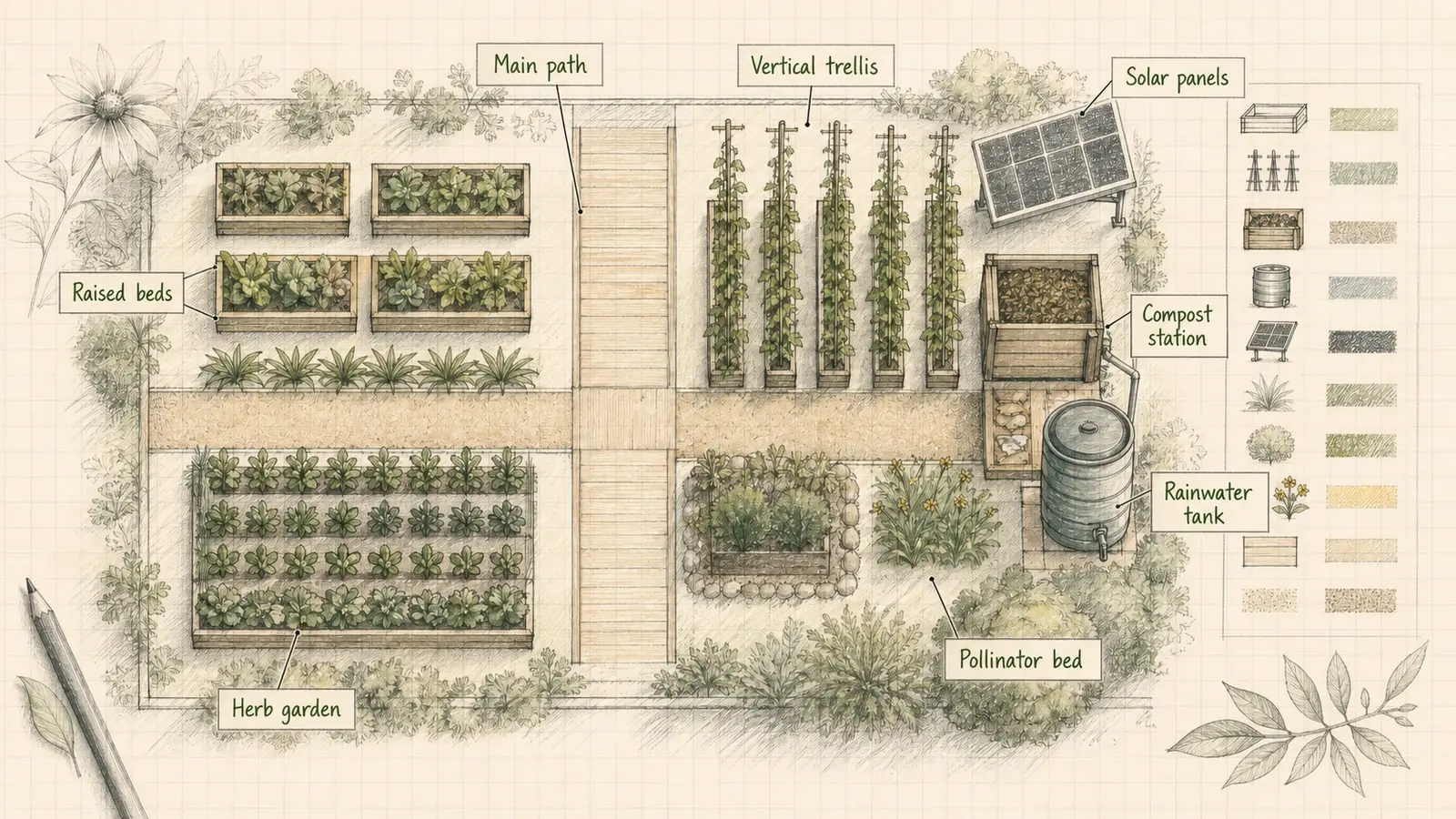
AgriTecture combines agriculture and architecture. For a Malaysian urban site, that means a garden should not only look green. It should produce food, manage water, support the community, stay safe to maintain and create long-term value.
This guide turns the AgriTecture idea into a practical planning checklist for community gardens, edible landscapes, rooftop spaces, school gardens, residential courtyards and commercial green corners.
The simple formula
- Productive food space: vegetables, herbs, fruiting plants, seedlings and practical harvesting zones
- Landscape structure: walkways, beds, shade, seating, drainage, storage and safe movement
- Community care: shared SOP, maintenance schedule, training and review meetings
When these three parts work together, the garden becomes easier to maintain and more useful than a decorative green corner.
SAPMoRe framework for urban farming
| Stage | What to check | Professional output |
|---|---|---|
| S - Survey | Topography, flood risk, land ownership, existing services and PBT approval needs | Basic site-risk note before spending on materials |
| A - Analyze | Sunlight, shade from buildings, water source, electrical point, access and physical obstacles | Clear planting zones and practical infrastructure direction |
| P - Planning | Raised beds, hydroponics, fertigasi, vertical planting, paths, storage and green infrastructure | A maintainable layout with planting system, circulation and budget priorities |
| Mo - Monitoring | Watering, fertilising, pest checks, cleaning, harvest timing and volunteer duty | Daily or weekly SOP that keeps the garden controlled |
| Re - Review | Yield, cost, waste, community use, product ideas and certification pathway such as myGAP | Improvement plan for the next planting cycle |
Site planning checks before building
- Confirm who owns the land and whether written permission is needed
- Check with the relevant PBT if land-use approval or community garden permission is required
- Study low points, runoff direction and areas with flooding risk
- Record direct sunlight hours and shade caused by buildings, walls or trees
- Confirm reliable water access before choosing the planting system
- Check whether electricity is needed for pumps, lights, timers or IoT monitoring
- Keep walkways wide enough for maintenance, harvest movement and safe community use
Skipping these checks is where many urban gardens become difficult to maintain later.
Choose a hybrid planting system
- Raised beds work well for soil-based vegetables, herbs and mixed edible planting
- Hydroponic or NFT systems suit compact production zones where water and nutrient control are important
- Fertigasi systems can support chilli, tomato, brinjal, cucumber and other higher-value crops
- Vertical planting helps narrow walls, balcony edges and small community spaces become productive
- Productive softscape keeps the garden attractive with edible plants, herbs, flowers and pollinator-friendly species
A hybrid system is usually stronger than relying on one method only. It lets the site serve beginners, volunteers, production goals and visual landscape needs at the same time.
Green infrastructure to include
- SPAH rainwater harvesting for irrigation backup
- Solar support for small pumps, lighting or monitoring where suitable
- Composting area for dry leaves, crop waste and organic material
- Good drainage, gravel zones or grading so heavy rain does not damage roots
- Reused containers, timber, drums or modular beds where they are safe and clean
- IoT sensors only where the team has someone who can maintain them
The goal is not to add technology for show. The goal is to reduce waste, control maintenance and make the garden more resilient.
Operations and community SOP
- Create watering, fertilising and cleaning schedules
- Inspect pests early using an IPM approach before heavy chemical use is considered
- Separate clean harvest areas from compost and waste areas
- Do not burn garden waste
- Train volunteers on tools, hygiene, harvest handling and safety
- Assign responsibility clearly so the garden is not dependent on one person
An urban farm can fail even with good design if nobody owns the routine. A simple weekly SOP is more valuable than a complex plan nobody follows.
Harvest and post-harvest handling
- Before harvest: control water, fertiliser and harvest timing so produce is fresh
- During harvest: use clean tools and gentle handling to avoid bruising vegetables
- After harvest: wash, sort, grade, pack and store produce properly
- For sales: use simple branding, harvest dates and clear community distribution rules
Post-harvest handling matters because it protects quality, reduces waste and makes the project feel more professional.
Economic opportunities
- Upstream: seedlings, nursery stock, compost, growing media and starter kits
- Downstream: packed vegetables, sauces, snacks, herbs, workshops and branded community produce
- Community value: lower household food cost, local skills, greener shared spaces and stronger neighbourhood activity
The best community garden is not only beautiful on launch day. It can keep producing value after the first planting cycle.
Design for function and comfort
- Use softscape for vegetables, herbs, fruit trees, flowers, groundcover and pollinator plants
- Use hardscape for paths, benches, gazebo, storage, fencing, raised-bed edges and wash points
- Add therapeutic details such as shaded seating, textured paths, quiet water sound and safe gathering areas
- Use companion planting and flowering plants to attract pollinators and reduce pest pressure naturally
For RimbaScape landscape work, the main principle is simple: do not design an edible garden only to be pretty. Design it so it produces food, controls water, is safe to use, has a care routine and can be improved over time.
Need help?
Send RimbaScape your site photos, location, rough area size, sunlight condition and whether the space is private, commercial or community-owned. We can help plan the planting system, green infrastructure and maintenance flow.
Need help with this?
Send RimbaScape photos, location, sunlight condition and your budget range. We will advise whether you need plant supply, maintenance or a site visit.
Plan an edible community gardenMore Guides
Overwatering Indoor Plants: The 5W1H Guide to Healthier Roots
Learn who is most at risk, what overwatering really means, when to water and how to prevent root rot, yellow leaves and fungus gnats.
Read guideOrganic vs Chemical Insecticides Around Pets
Learn how to control garden pests with a lower-risk, targeted approach for homes where cats, dogs and other pets spend time.
Read guideLawn Maintenance Guide: Mowing, Trimming & Clean-Up
Keep your lawn neat, healthy and safe with regular mowing, grass trimming, weed removal and garden clean-up.
Read guide