RimbaScape Guide
Safe Chemical Pesticide Use in Landscaping
Chemical pesticides can be effective, but they must be selected and applied carefully to protect people, plants and the environment.
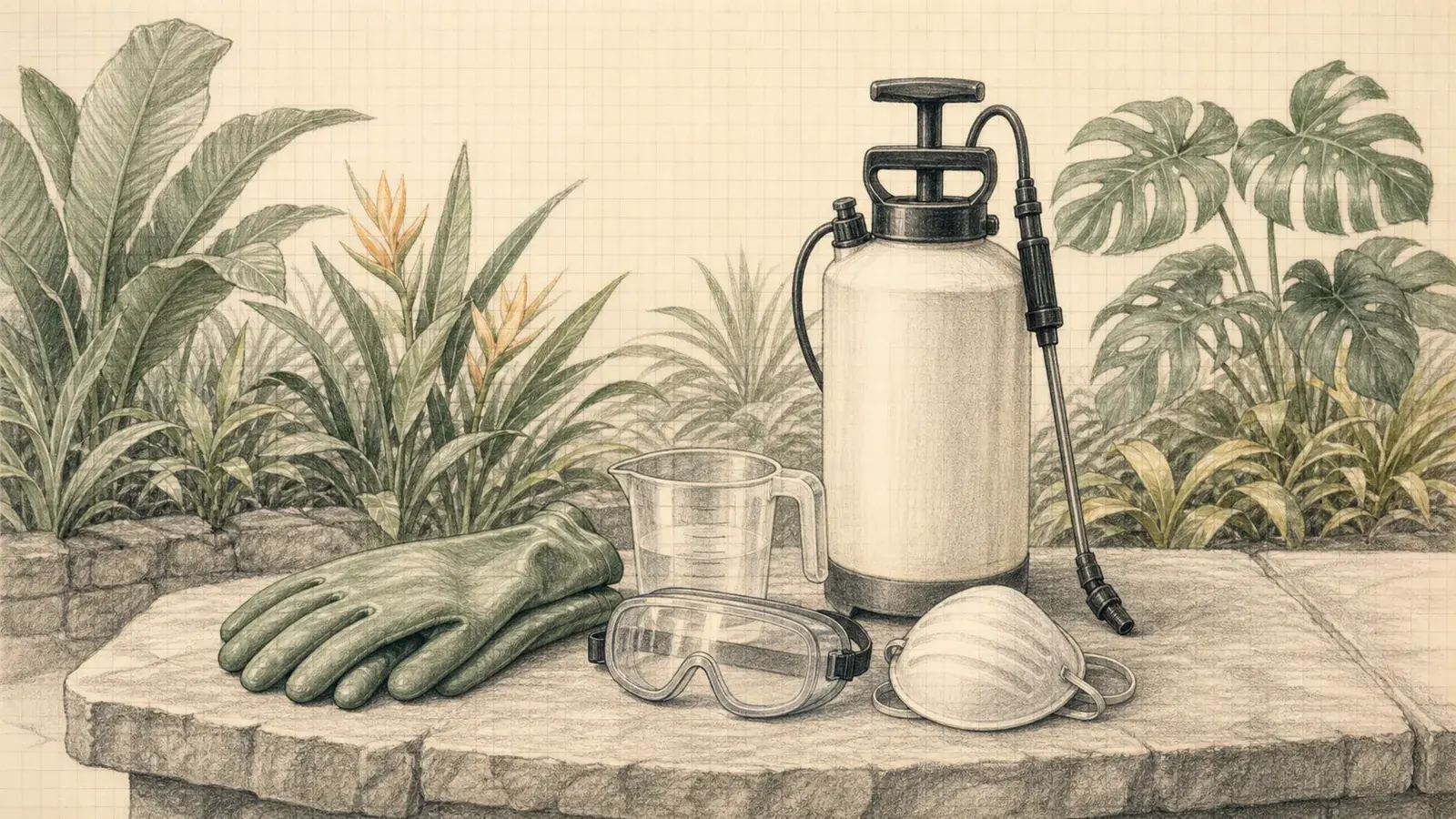
Chemical pesticides are sometimes necessary in landscaping, especially when pests have spread widely or are causing serious damage. They can help protect lawns, ornamental plants, shrubs, palms and commercial landscape areas.
Responsible use matters. The wrong product, wrong dosage or wrong timing can damage plants, harm useful insects, create safety risks or pollute drains and waterways.
Before chemical treatment
- Identify the pest or disease correctly
- Check whether the problem is really pest-related
- Choose the correct pesticide type for the issue
- Read and follow the product label
- Use proper protective equipment
- Avoid spraying during strong wind or rain
- Keep people and pets away from treated areas
- Avoid overspraying or repeated unnecessary treatment
- Record the treatment date and product used
Problems that may not need pesticide
- Yellow leaves from overwatering or underwatering
- Root stress from poor drainage
- Weak growth from low light
- Nutrient deficiency
- Heat stress or transplant shock
- Compacted soil or old potting mix
Chemical pesticides should not be the first answer for every plant problem. A professional approach uses them only when needed and combines treatment with better maintenance practices.
Need help?
Ask RimbaScape to inspect the issue first so treatment is chosen for the actual plant problem, not guessed from symptoms alone.
Need help with this?
Send RimbaScape photos, location, sunlight condition and your budget range. We will advise whether you need plant supply, maintenance or a site visit.
Ask about safe treatmentMore Guides
Overwatering Indoor Plants: The 5W1H Guide to Healthier Roots
Learn who is most at risk, what overwatering really means, when to water and how to prevent root rot, yellow leaves and fungus gnats.
Read guideOrganic vs Chemical Insecticides Around Pets
Learn how to control garden pests with a lower-risk, targeted approach for homes where cats, dogs and other pets spend time.
Read guideLawn Maintenance Guide: Mowing, Trimming & Clean-Up
Keep your lawn neat, healthy and safe with regular mowing, grass trimming, weed removal and garden clean-up.
Read guide